
The Roots of Bird Conservation in Penn’s Woods
Written by Joe Kosack in the Features category and the Spring 2026 issue Topics in this article: Academy of Natural Sciences, Alexander Wilson, Audubon Society, B. Harry Warren, Benjamin Smith Barton, bird conservation, birds, Clinton Hart Merriam, George N. Lawrence, Hawk Mountain Sanctuary, John Bartram, John Cassin, John James Audubon, market hunting, Pennsylvania Game Commission, Rachel Carson, Richard Pough, Rosalie Barrow Edge, Scalp Act, Silent Spring, Smithsonian Institution, Spencer Fullerton Baird, Wildlife Act of 1873, William Bartram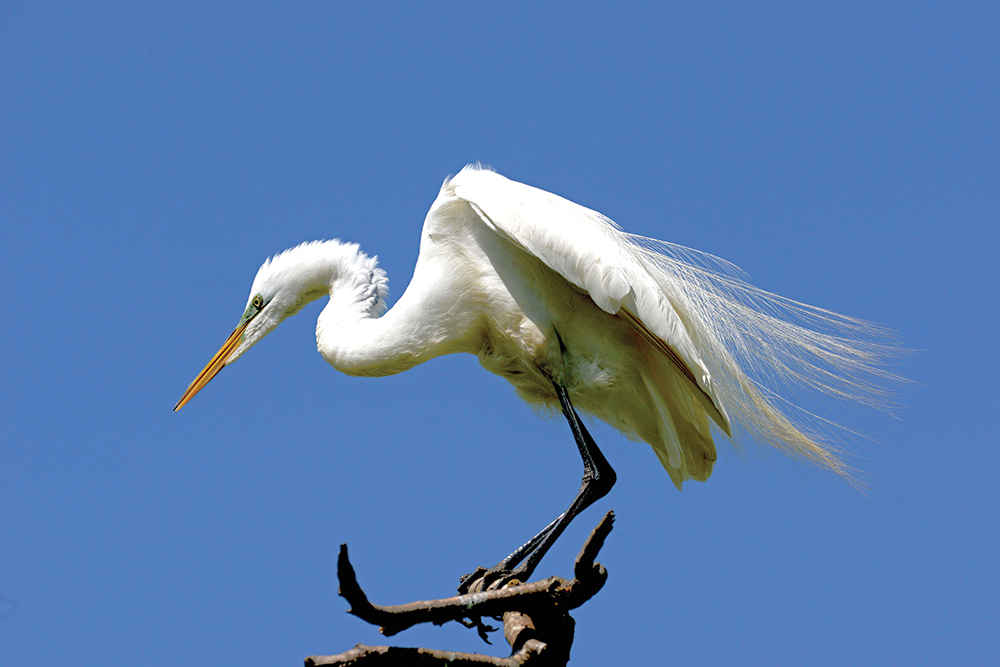
Although the great egret is a Pennsylvania endangered species, its populations are much improved elsewhere in North America. It was one of several colonial nesting birds exploited to the brink of extinction at the close of the 19th century to fuel an insatiable demand from millineries that used the feathers, plumes or skins of everything from hummingbirds to wading birds to adorn women’s hats.
Pennsylvania Game Commission / Photo, Joe Kosack
Native naturalists and immigrant ornithologists who began their celebrated careers in Penn’s Woods played a pivotal role in establishing America’s enduring romance with the continent’s fabled feathered tribes. Their fieldwork and studies also helped assemble and strengthen the natural science from which bird conservation emerged in the United States.
Birdsong, species diversity and the mysteries of avian migration fascinated the country’s growing population in the decades following the American Revolutionary War. Ornithology was gaining momentum in Europe and the movement had legs in the United States, especially in Philadelphia. There was interest on both sides of the Atlantic to inventory America’s creatures and plants. European aristocrats and museums were eager to acquire newly identified species for their collections and attractions. That interest intensified as the published works of self-taught American naturalists started to reveal the country’s rich, still largely undocumented birdlife, a tantalizing treasure that drew even more excitement with the Louisiana Purchase in 1803.
Although ornithology’s beginnings can be traced back to Aristotle, its utility as a science came to the fore in the latter 1700s and early 1800s. It was against this backdrop that personal and institutional expeditions were undertaken to find, identify and describe America’s birds. Such exploration drew the interest of European immigrants Alexander Wilson (1766–1813) and later John James Audubon (1785–1851), considered by most academics the founding fathers of American ornithology.
But other important naturalists came before these enterprising bird explorers. Darby-born colonial botanist John Bartram (1699–1777), founder of Bartram’s Garden in Philadelphia, was the first recognized Pennsylvanian to wade into frontier America to study and document its plants and animals. His son, William (1739–1823), soon shared his interests. Both men willingly endured the hardships of wilderness life, in forays as far south as Florida’s gator country, and then published accounts of their exploits and findings.
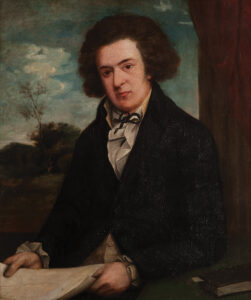
Lancaster native Benjamin Smith Barton is considered America’s first professional natural history scientist. His fieldwork, which inspired Fragments of the Natural History of Pennsylvania, supported and expanded upon his mentor William Bartram’s bird migration beliefs.
American Philosophical Society Library / Portrait by Samuel Jennings
William Bartram was an exceptional writer with a deftness to accurately draw what he encountered afield. His deep-seated interests in natural history and Native American culture pushed him to explore south to the Gulf Coast and west to the Mississippi River. During his expeditions, he established evidence to support bird migration, then a theory still gaining traction. His recognition of birds in the South that disappeared each fall in Penn’s Woods to points then unknown — some speculated the moon — helped him better distinguish resident birds from seasonal migrants. In his lifetime, Bartram identified 140 bird species that bred in Pennsylvania, a remarkable, but mostly unheralded, achievement. The Second Atlas of Breeding Birds in Pennsylvania found 190, with the help of more than 2,000 volunteers between 2004 and 2009.
Lancaster native Benjamin Smith Barton (1785–1844) is considered America’s first professional natural history scientist. Mentored by William Bartram, who became his close friend, Barton corroborated Bartram’s theories with observations that tied migrations to seasonal changes and food availability. He also clarified that bird ranges are larger than supposed and even suggested some naturalists were misidentifying certain species’ males and females as two distinct species. His fieldwork and deductive reasoning, which populate his 1799 book, Fragments of the Natural History of Pennsylvania, advanced the understanding of birds and other wildlife. Interestingly, Barton, like Bartram, is often recognized first and foremost as a botanist, but both naturalists made important contributions to American ornithology.
Barton believed American natural history lacked the attention and cultivation it received in Europe. Such scientific discipline wasn’t yet in place in America. But it was coming. The Academy of Natural Sciences of Philadelphia was founded by six amateur scientists mere months before the War of 1812 erupted. With time, it became an important international research and collaboration destination for naturalists, taxonomists and scientists, as well as a repository of scientific findings, naturalists’ journals, and worldwide faunal and floral collections.
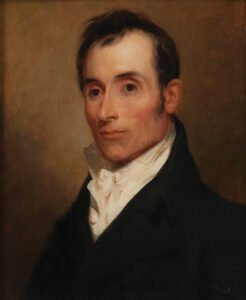
Alexander Wilson wrote and illustrated the groundbreaking nine-volume American Ornithology between 1808 and 1814, documenting the birds of North America he encountered on his travels.
American Philosophical Society Library
As Barton immersed himself in botany at the outset of the 19th century, Wilson left a Philadelphia-area schoolteacher position to study America’s birds full-time. He eventually assembled his comprehensive collection of observations and drawings into the sweeping nine-volume American Ornithology, which depicted 320 birds (56 never illustrated) and went into publication in 1808.
The asking price of $12 per American Ornithology volume was prohibitively expensive. Only 488 individuals subscribed to the project, which supplied patrons with the latest volume upon publication in Philadelphia, a tedious process that would take until 1814 to complete. Surprisingly, one person who passed on a subscription was Audubon when he and Wilson met in Kentucky in 1810.
Audubon wouldn’t envision his own book series until about 10 years later, although his interest in birds can be traced to his youth. His Birds of America, which identified 1,037 species, eventually was published in a four-volume set on double-elephant paper (roughly 26 by 39 inches) to accommodate 435 hand-colored, life-size bird illustrations. Printing started in 1827 in London; it would take 10 more years to complete the series. The first edition was limited to fewer than 200 sets, each of which was sold by subscription for $1,000, a princely sum even today; however, in June 2018, the last time a set was auctioned, it sold for $9.65 million at Christie’s in New York City.
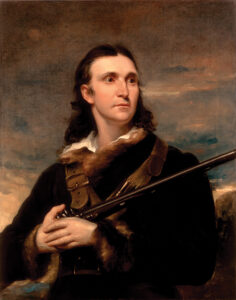
John J. Audubon was a self-taught artist whose life-sized bird portraits in Birds of America exude panache that stops people in their tracks. Writing about the natural history of his subjects, however, often challenged him.
Wikimedia Commons / The White House
Pioneering Birdmen
Wilson settled in Philadelphia in 1794, Audubon at Mill Grove in 1803. Wilson was considered the better scientist, Audubon the better artist. Consequently, their books present birds differently. Although Wilson’s writing authoritatively describes bird behavior with keen observations, his illustrations were less captivating. Conversely, Audubon’s artwork was more authentic, sagaciously aligning subjects in their preferred habitat. But his writing lacked the substance more experienced ornithologists always share. Audubon once admitted he wasn’t a “learned naturalist,” only a “practical one.”
Given the well-deserved recognition Wilson received for American Ornithology, Audubon naturally harbored at least some rivalry toward Wilson as his Birds of America took flight. But it was unnecessary. The encyclopedic works of both men are recognized as revolutionary in the ascension of bird conservation. They gave people pause to consider wild birds as more than food, pests or unwelcome predators.
Within weeks of Wilson’s death, John Cassin (1813–69) was born in rural Delaware County. Hardly a frontiersman in the mold of the pioneering ornithologists who preceded him, Cassin nonetheless made huge contributions to bird conservation as the Academy of Natural Sciences’ curator, a position he took in 1842 and held, even while a Union soldier imprisoned in a Confederate concentration camp, until 1869. During his tenure, the Academy already had one of the world’s largest collections of bird skins and mounts, an outcome of academy expeditions and purchases funded by wealthy patrons, and it was through working with this vast collection that Cassin earned his chops as a taxonomist. It placed him in a position to describe 200 new species of birds in the world, as well as define shared characteristics and behaviors among birds, all meaningful and innovative gains for ornithology.
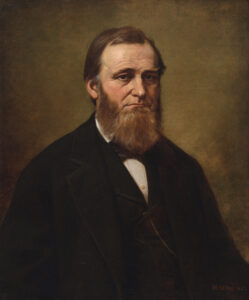
Reading native Spencer Fullerton Baird dedicated his life to investigating, unraveling and comprehending North America’s natural history. His work dominated the field in the mid-1800s, when he served as the first curator of the Smithsonian Institution and still found time to refine wildlife taxonomy and push its boundaries.
National Portrait Gallery, Smithsonian Institution / Portrait by Henry Ulke, 1887
Cassin died at age 55, presumably from arsenic poisoning, an occupational hazard for taxonomists who almost exclusively used arsenic to preserve birds. But not before he met and collaborated with Reading native Spencer Fullerton Baird (1823–87), a self-taught naturalist with ties to Audubon, who earned his bachelor’s and master’s degrees at Dickinson College in Carlisle, where he studied from ages 13 to 17. At 19, he visited the Academy of Natural Sciences, where he and Cassin probably met. By the time Baird became the first curator of the Smithsonian Institution in 1850, he was recognized as one of the world’s best-known naturalists.
Baird was an amazing explorer and played a vital role in establishing wildlife collections at the Smithsonian. He also collaborated with Cassin and George N. Lawrence (1806–95) in writing the two-volume Birds of North America (1860), which identified and described 1,144 species. He followed up with a compelling research paper on the relationship of topography, temperature and altitude on the distribution and migrations of North American birds, published in 1866 in Silliman’s Journal (today’s American Journal of Science).
Baird mostly used the shoe-leather express in Pennsylvania and throughout the Northeast to observe and collect birds and other wildlife. But he also traded with other collectors, including Audubon, to expand his collection, a passion that started when he was 8. Baird, like Cassin, was deeply interested in taxonomically classifying wildlife species. This tedious diagnostic work, for which few were qualified, assessed the empirical work of ornithologists to establish accurate species accounts. The principles and rigorous procedures that guided this process strengthened the biology governing ornithology.
Gains and Strains
Pennsylvania’s earliest wild bird protection can be traced to 1841, when it became unlawful to kill “small insectivorous birds” from April 1 to August 10 in parts of Chester, Lehigh, Delaware, Northampton and Montgomery counties. Possibly inspired by the growing fraternity of naturalists in the Delaware Valley but restricted to “small” birds because plenty of people still ate robins, doves and other similar-sized birds, the law was a door-opener for bird conservation. More regional protection followed. Then the first statewide law appeared in 1858, making it illegal to kill any “bluebird, swallow, martin or other insectivorous bird,” or to take its eggs or nests. Even in this law, bird size and diet apparently mattered.
Although these laws are indicative of growing support for wild bird conservation, their protections really didn’t help birds, particularly those facing the greatest adversity: hawks, owls, waterfowl and the once indominable passenger pigeon, so recklessly exploited their billions had become mere millions. Protecting any wild bird was a tough sell in 19th century Pennsylvania. Nonetheless, these early laws document concern for the resource and initial attempts to cultivate a conservation ethic.
The Wildlife Act of 1873 took another swing at strengthening Pennsylvania’s wild bird protection and limiting the wholesale slaughter of migrating birds. Its passage made it illegal to kill, sell or possess any songbird, or disturb their nests and eggs. The act included an overdue ban on punt guns, boat-mounted cannons that shot 1- to 2-pound loads of pellets and killed waterfowl resting on the water by the scores. In addition, it banned discharging firearms within a quarter of a mile of passenger pigeon nesting areas.
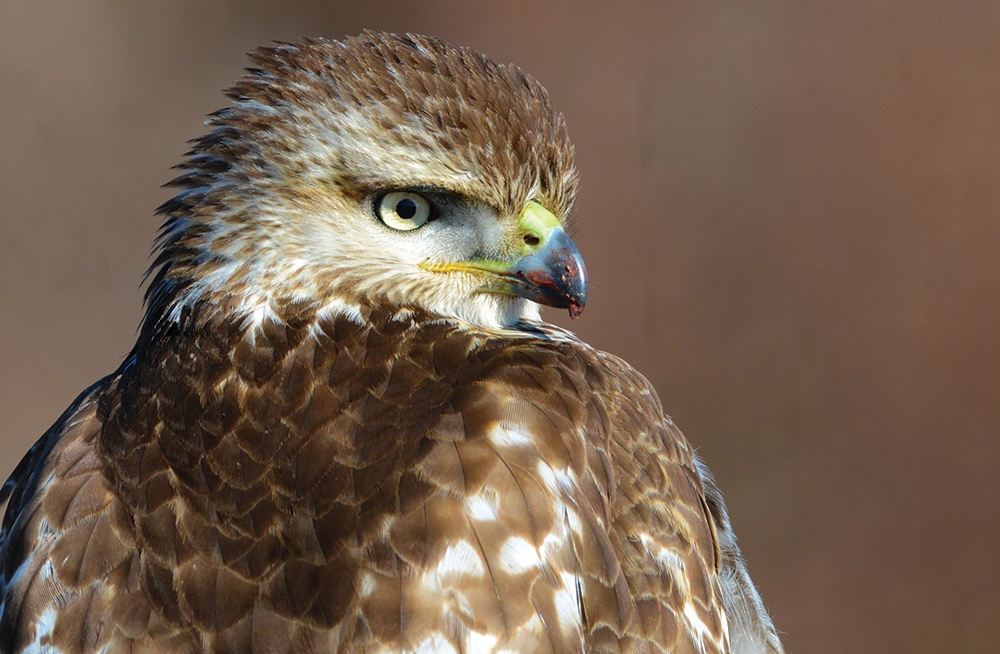
Even after 20th century naturalists confirmed these raptors preferred a diet of small rodents, redtails were shot on sight, because their overall size, immense talons and flesh-tearing beak won them few allies. Few raptors were more misunderstood.
Pennsylvania Game Commission / Photo, Joe Kosack
And yet, it wasn’t enough. Although this act provided sufficient statutory means to protect wild pigeons and most other songbirds, it failed to assign and align the necessary might to accomplish the statewide conservation intended. Still decades before the coming of Pennsylvania Game Commission wardens and State Police troopers, enforcement of the act’s provisions fell to sheriffs, constables and other public servants, who already were overtasked by a new phenomenon straining municipal and state governments — an incredible influx of immigrants. From the 1870s through the turn of the century, Pennsylvania’s population increased almost 80 percent and augmented the workforce of America’s Industrial Revolution, which was defiling, contaminating or swallowing chunks of countryside and rendering lifeless countless waterway miles. Railroads accelerated the speed at which trouble arrived.
Immigrants found work dropping stands of Penn’s Woods for new homes, farm fields and construction materials, as well as making charcoal for iron forges and stripping tannin-rich bark from hemlocks for leather tanneries. Others joined the prospering steel industry along the Ohio River, mined coal in the Appalachian Mountains, or quarried limestone in the Great Valley. There were few easy existences, which is why resourcefulness quickly became a key trait of these new Pennsylvanians.
Often working for nickels a day, they offset living expenses by snaring and hunting rabbits, squirrels and songbirds, using their flesh to make pies, sauces and soups. After a while, though, these small creatures became tough to find. The pressure on them was intense. Such food woes correspondingly prompted increased wildlife market hunting, which already had extirpated elk and all but decimated whitetails. Passenger pigeons weren’t far behind. Pennsylvania’s last two known nesting colonies, which were ravaged without intervention, were near Sheffield in 1878 and on Kettle Creek near Emporium in 1882.
The growing burden placed on the state’s natural resources by thousands upon thousands of new residents was profound. The helter-skelter use of the countryside and extraction of natural resources was interrupting and upending centuries-old ecological arrangements, complicating the existence of myriad lifeforms, including those charismatic creatures that once captivated William Penn and influenced the well-being of generations of Native Americans. Such environmental degradation was unprecedented in North America. And it was far from over.
Deadly Deeds
Pennsylvania’s Scalp Act of 1885 established a 50-cent bounty on weasels, all hawks, and all but three species of owls. Cobbled together by a concerned legislature in response to poultry and game depredation complaints from farmers, this law led to the extermination of 128,570 animals, mostly hawks and owls. Although widely used in the 1800s, bounties really didn’t solve problems; they just wasted money and promoted compensatory reproduction among targeted predators.
What’s puzzling about the law’s passage, which marked the first time raptors were bountied in Pennsylvania, is that research by Marshallton-born ornithologist B. Harry Warren (1858–1926), a zoologist for the Pennsylvania Board of Agriculture, had exonerated hawks and owls. His recent studies on the stomach contents of birds of prey revealed most consumed small rodents and birds, not farm fowl. Warren’s findings turned some heads. And yet, his work, at least initially, failed to sink the dubious Scalp Act.
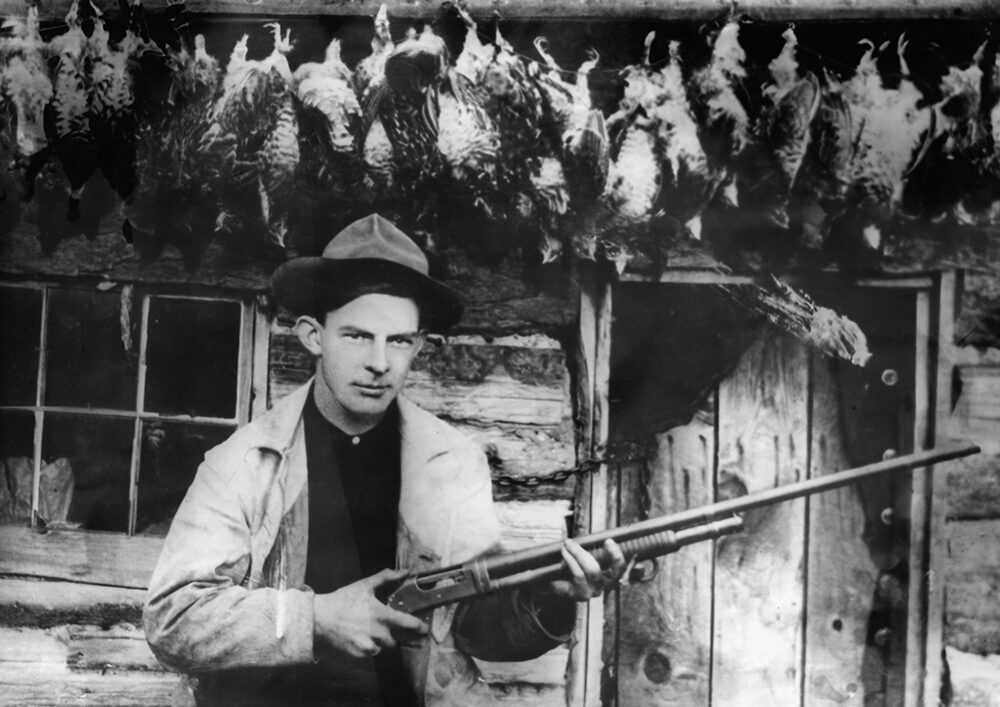
Market hunters, like this ruffed grouse profiteer, specialized in underhanded ways to exploit natural resources for sale to markets, restaurants and butcher shops. Such unchecked and uncompromising commercialization sent the passenger pigeon into extinction.
Pennsylvania Game Commission
It was criticism of the Scalp Act’s financial inequities, published in the 1886 Report of the Secretary of Agriculture, that led to its coup de grâce. That analysis came from Clinton Hart Merriam (1855–1942), chief of the then one-year-old U.S. Department of Agriculture’s Division of Ornithology and Mammalogy. He was a fan of Warren’s work.
“Granting that 5,000 chickens are killed annually in Pennsylvania by hawks and owls, and that they are worth 25 cents each, the total loss would be $1,250, and poultry killed in a year and a half would be worth $1,875,” Merriam wrote. “Hence it appears the State of Pennsylvania has expended $90,000 to save farmers a loss of $1,875.”
Worse, Merriam added, the Scalp Act killed beneficial predators that would have consumed at least $3.9 million in rodents and insects that cause crop losses. The law was repealed in 1887.
Proven ineffective, bounties nonetheless continued in Penn’s Woods. So, too, did inadequate protection of hawks and some owls, despite increasing support for their protection from state and national conservation organizations. Pennsylvania’s cultural inertia to exterminate most birds of prey continued to undermine reform attempts. It was a resistance emboldened by farmers and hunters who lobbied effectively to prolong their war on predators. Even some birdwatchers strengthened this bias, complaining about Cooper’s and sharp-shinned hawks waylaying songbirds at their backyard feeders.
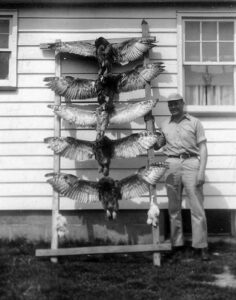
Predator prejudice came to America with European colonization. Whether big cats and bears, or foxes and owls, all were equally despised as game and livestock killers. And when local and state governments created bounties for great horned owls, hunters obliged them, mostly for the money, but hatred, even a distorted sense of civic duty, also played a role.
Pennsylvania Game Commission
In 1888, the Pennsylvania Board of Agriculture published Warren’s Report on the Birds of Pennsylvania, a 434-page book that became the first and most complete guide to the state’s birds. The publication helped residents become more familiar with wild birds and effectively used research to dispel inaccurate traditional beliefs about the food habits of birds of prey. Warren also visited grange halls and sportsmen’s clubs to spread the word about the importance of birds. His outreach occurred at a time when even bald eagles could be shot legally for being disease spreaders and game thieves, which was pure fabrication.
As Warren’s book was circulating in 1890, the Delaware Valley Ornithological Club was forming. It would play an important role in bird conservation by seasonally documenting bird abundance and behavior in Pennsylvania and the Philadelphia area to measure population trends more accurately, with an eye toward identifying regional problems birds faced. Closely aligned with the Academy of Natural Sciences, where the club’s meetings historically have been held, it is one of America’s oldest ornithological organizations.
Concern for wild birds was mounting as the century’s close approached. Passenger pigeons were almost gone. Cavity-nesting birds, such as bluebirds, woodpeckers, chickadees and wrens, were losing nest sites in the wake of a poor decision to release house sparrows (1851) and starlings (1890–91) in New York City; through population expansion each reached California in about 50 years. Deforestation was impacting the populations of beloved forest denizens such as screech-owls, pileated woodpeckers and scarlet tanagers. Water pollution and dams were short-circuiting centuries-old ecological communities that included songbirds, varied waterfowl and wading birds.
And then, more gas was thrown on the fire: Stuffed songbirds and egret plumes became chic in women’s hat styles. Further heightening the problems wild birds were up against was a fad to collect and display bird nests and egg collections, which already was overdone by professional naturalists, particularly those working for or selling to museums. The rarer the bird, the greater the pressure on it.
The mayhem consuming North American birds was hard to ignore; some were in seemingly irreversible dire straits. In 1886, George Bird Grinnell (1849–1938), publisher of Forest and Stream magazine, called for a national “Audubon Society.” His plea would be answered, but not until 1896, when the first Audubon Society was formed in Massachusetts; a second was established in Pennsylvania later that year. In 1905 a “National Association of Audubon Societies” was started in New York City. It didn’t take these fledgling organizations long to sway fashion’s fancy away from songbirds and egret plumes. They also effectively lobbied state and federal legislators to do more for wild birds.
The Pennsylvania Game Commission was established in 1895, and when its commissioners were appointed more than a year later, Warren became temporary executive secretary of an organization without financial resources. Williamsport-native Joseph Kalbfus (1852–1919) followed in 1898 but was appointed a full-time executive secretary with no salary. That left heartfelt words and political persuasion as the only means available for these men to help birds.
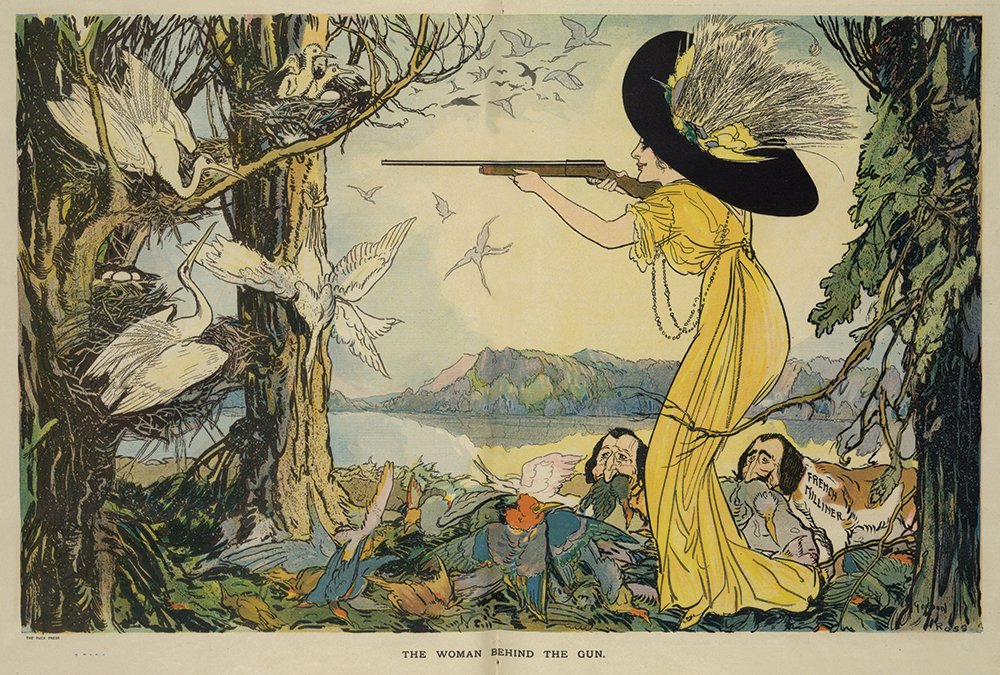
Published in 1911 in Puck magazine, this satirical illustration by Gordon Ross measured the cost of women’s fashion on America’s declining nesting colonies of wading birds, such as great egrets. The creation of state Audubon societies, and eventually a National Association of Audubon Societies, spurred a crusade that eventually smothered this exploitation by reasoning with Americans and their legislators that no bird should go extinct from the demands of fashion.
Library of Congress Prints and Photographs Division
The indefensible killing of so many birds gave both men pause as they barnstormed for ways to invigorate bird conservation. They recognized Pennsylvania no longer could push off until tomorrow the sins routinely being committed against birds. Change was necessary, but societal indifference continued to inhibit reform. Most states had similar problems.
In 1897 through lobbying by Warren and the game commissioners, Pennsylvania stopped spring duck hunting, which had been limiting waterfowl reproduction. Two years later, Kalbfus wrote, and the commissioners sanctioned, a resolution condemning spring hunting of “aquatic fowl” in America and Canada. Both were big steps for the new Game Commission on the national stage, where states’ rights concerns routinely were employed to upend national attempts to close spring waterfowl hunting seasons.
In 1905 Kalbfus, with help from the agency’s established and growing game warden ranks and the General Assembly, crafted a means to end private and commercial bird, egg and nest-taking within the state’s borders by requiring a Game Commission–issued permit to collect these avian items. Issued for only “scientific study,” the permits limited collectors to eight birds, two nests and their contents. Aided by the rise of much-needed sapling jungles and pole-timber woodlands on formerly deforested landscapes, songbird reproduction responded. The chestnut blight, which surfaced in Pennsylvania around 1908, also hampered the ongoing songbird comeback, given chestnut trees provided food, canopy cover and nesting sites for wild birds. But it wasn’t as devastating for songbirds as it was for other denizens of Penn’s Woods.
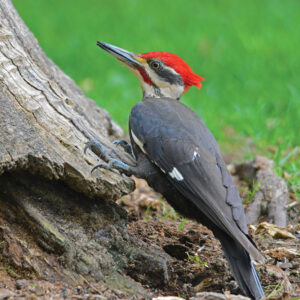
The pileated woodpecker was excluded by the commonwealth from Migratory Bird Treaty protection, because it was framed as a “tree-killer.” That lack of understanding and ongoing deforestation decimated the species for decades. Today they are back. Listen for their boisterous cackle wherever woods offer dead trees for these woodpeckers to capitalize upon.
Photo, Joe Kosack
Impasse Extraordinaire
It was clear neither the federal government nor the scientific community had the authority, let alone the wherewithal, to help wild pigeons; they went extinct in 1914. Most states were aware of the coming tragedy, but states’ rights remained a touchy subject for decades after the Civil War. Most states believed they had the sovereignty to manage migratory birds within their borders. But such unilateral thinking took its toll on migratory birds, from passenger pigeons to trumpeter swans.
In 1904 Pennsylvania Congressman George Shiras III (1859–1942), renowned for innovating nighttime wildlife flash photography, proffered legislation in the U.S. House of Representatives to put migratory-bird management in the hands of the federal government, but the bill died in committee. It did, however, generate more discussion to resolve the issues that divided states and help flesh out the universal benefits of national waterfowl management. Although it took years and several legislative drafts to craft a solution, what emerged was a groundbreaking conservation initiative — an international bird treaty with Great Britain on behalf of Canada. The Migratory Bird Treaty was signed by President Woodrow Wilson in 1916.
What remained was finding a way to protect birds of prey, for which there was little public sympathy. Some of the worst hostilities against avian predators occurred along Schuylkill County’s southern border on the Blue Mountain’s Kittatinny Ridge, where an abominable number of migrating hawks were slaughtered annually by scores of shooters, particularly on Sundays, in a misguided effort to protect game.
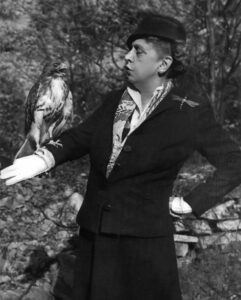
Rosalie Edge used her steely determination and family’s wealth to silence the guns that killed and crippled thousands of migrating raptors annually passing close to locally named “Hawk Mountain.” In 1934, after a vigorous campaign, she bought that chunk of the Blue Mountain’s Kittatinny Ridge where raptors came within gun range of the mountain. Overnight, long-persecuted birds on this migratory highway were protected forevermore.
Courtesy of Hawk Mountain Sanctuary
Game Commission ornithologist George M. Sutton (1898–1982) first wrote about the carnage on Hawk Mountain in the Wilson Bulletin in 1928. Then Earl L. Poole (1891–1972), artist, naturalist and Reading Museum assistant curator, started collecting data on raptors shot at Hawk Mountain in 1929 and, after four years, published his findings in 1934 in The Auk.
Poole’s data substantiated the need for intervention, but it was photographs taken of dead hawks collected and arranged in 1932 by naturalist and later Nature Conservancy founder Richard Pough (1904–2003) that drew national attention to the Hawk Mountain carnage. He presented his photos at the American Ornithologists Union’s 50th anniversary meeting in New York City in October 1933. Rosalie Edge (1877–1962), a wealthy wildlife crusader, once described as an “indomitable hellcat,” was at that meeting and immediately drawn to the cause. She bought Hawk Mountain in 1934.
In 1937 a recodified Game Law finally offered protection to all birds, except goshawks, sharp-shinned and Cooper’s hawks, blue jays, kingfishers, crows, and great horned and snowy owls. But any avian predator, including eagles, could be shot if caught destroying farm or game animals, hatchery fish, or other protected birds. Leaving some hawks and owls unprotected also led to confusion: Few Pennsylvanians knew which birds of prey were protected. So, they knowingly and unknowingly killed protected raptors. Everywhere.
Within 10 years, several birds of prey and songbirds began falling to an invisible enemy, eventually identified as a popular insecticide that was used by everyone from farmers and foresters to homeowners and pest managers. The use of DDT goes back to World War II, and the environmental nightmares it caused are legion. Its deleterious effects on apex predators such as the bald eagle, osprey and peregrine falcon are well chronicled. But other birds and animals also were tortured by this deadly elixir. Avian predators bioaccumulated DDT from eating contaminated prey, causing them to lay eggs so brittle they broke when laid upon, wretchedly cratering their reproductive success and, with time, populations.
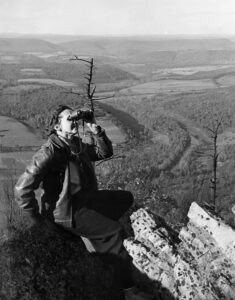
Springdale native Rachel Carson, pictured here at Hawk Mountain Sanctuary’s North Lookout in the mid-1940s, led the charge challenging the use of DDT and other deleterious organochlorines in agricultural and household insecticides. Her research as a federal marine biologist showed these chemical concoctions caused huge reproduction problems for apex predators, such as bald eagles, ospreys and peregrine falcons.
Courtesy of Linda Lear Center for Special Collections and Archives, Connecticut College
DDT also impaired reproduction in fish, amphibians and other species, including the earthworm-gulping robin, which led Springdale native Rachel Carson (1907–64), a federal marine biologist, to notice the absence of birdsong she’d always heard in spring. Four years of inquiry led to her seminal 1962 book, Silent Spring, a catalyst of America’s environmental awakening.
It would take until 1972 for hawks to receive complete protection via an amendment to the Migratory Bird Treaty. That same year, DDT was banned. Today hawks and most other wild birds are protected by state and federal laws, game birds and invasive species excepted.
Pennsylvania Proud
As America celebrates its 250th anniversary and Pennsylvania’s legendary native sons and daughters who played indispensable roles in the formation of the United States, it seems appropriate to pay homage to this vanguard of Pennsylvanians who helped ensure that the songs and magnificence of birds still enrich Penn’s Woods. Without their involvement, which started before the Declaration of Independence was signed, it’s hard to know how effective bird conservation would be today. Their contributions were that significant.
These naturalists, biologists and birders were driven by what to them was an obvious need to document, conserve and celebrate the feathered tribes of North America, from long-legged shorebirds and waddling ducks to colorful neotropical songbirds and sharp-taloned birds of prey. Fundamentally, they believed all birds matter, regardless of physical appearance or reputation. And with time, they helped convince most Pennsylvanians to feel the same way.
Further Reading
Audubon, John J. The Birds of America. 7 vols. New York: J.J. Audubon; Philadelphia: J.B. Chevalier, 1840–44. / Barton, Benjamin Smith. Fragments of the Natural History of Pennsylvania. Philadelphia: Way & Groff, 1799. / Bildstein, Keith L. “Raptors as Vermin: A History of Human Attitudes Towards Pennsylvania’s Birds of Prey.” Endangered Species Update 18, no. 4 (July/August 2001): 124–28. / Billings, John S. Memoir of Spencer Fullerton Baird, 1823–1887. [Washington, D.C.]: Judd & Detweiler, 1889. / Burns, Franklin Lorenzo. The Ornithology of Chester County, Pennsylvania. Boston: Richard G. Badger, 1919. / Carson, Rachel. Silent Spring. Boston: Houghton Mifflin, 1962. / Chapman, Frank M. The Economic Value of Birds to the State. Albany: J. B. Lyon, 1903. / Gibbons, Felton, and Deborah Strom. Neighbors to the Birds: A History of Birdwatching in America. New York: W.W. Norton, 1988. / Graham, Frank, Jr. “In Memoriam: Richard H. Pough, 1904–2003.” The Auk 121, no. 3 (July 2004): 969. / Herber, Elmer C. “Spencer F. Baird—Nineteenth Century Naturalist.” Proceedings of the Pennsylvania Academy of Science 29 (1955): 43–47. / Kosack, Joe. Pennsylvania’s Wildlife Conservation History. Harrisburg; Pennsylvania Game Commission, 2023. / Report of the Commissioner of Agriculture. Washington Government Printing Office, 1886. / Rigal, Laura. “Empire of Birds: Alexander Wilson’s American Ornithology.” Huntington Library Quarterly 59, no. 2/3 (1996): 232–68. / Stone, Witmer. “John Cassin.” Cassinia: A Bird Annual: Proceedings of the Delaware Valley Ornithological Club 5 (1901): 1–7. / Sutton, George Miksch. “Notes on a Collection of Hawks from Schuylkill County, Pennsylvania.” Wilson’s Bulletin 40, no. 2 (June 1928): 84–95. / Sutton, George Miksch. “The Status of the Goshawk in Pennsylvania.” Wilson’s Bulletin 43, no. 2 (June 1931): 108–113. / Wilson, Alexander. American Ornithology: Or, the Natural History of the Birds of the United States. 9 vols. Philadelphia: Bradford and Inskeep, 1808–14. / Winker, Kevin, and Pamela C. Rasmussen. “Species Limits and Taxonomy in Birds,” Ornithology 138, no. 2 (April 6, 2021).
Joe Kosack worked for more than 30 years as a writer/editor/photographer for the Pennsylvania Game Commission. His writings and photographs have appeared in publications ranging from the Pennsylvania Travel Guide and Pennsylvania Game News to The Second Atlas of Breeding Birds in
Pennsylvania and Terrestrial Vertebrates of Pennsylvania. Kosack’s latest book, Pennsylvania’s Wildlife Conservation History, was published in 2023 and is available through the Pennsylvania Game Commission. A U.S. Army veteran and volunteer hunter education instructor for 35 years, he lives in the Pine Grove area with Denise, his wife of 48 years.