Philadelphia Cream Cheese: The Pennsylvania Story
Written by Emma Leuschner in the Features category and the Fall 2025 issue Topics in this article: Chester County, Concordville, dairy farming, Delaware County, Glen Mills, Kraft Foods, National Register of Historic Places, P.E. Sharpless Co., Pennock E. Sharpless, Pennock E. Sharpless House, Philadelphia, Philadelphia Cream Cheese, Toughkenamon, William A. Lawrence & Son Co.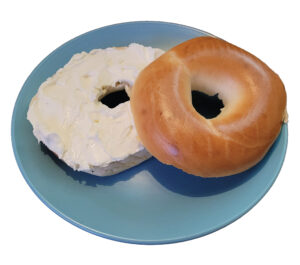 Whether smeared on a bagel, baked into cheesecake, or stuffed in peppers, Philadelphia Cream Cheese is a popular dairy product found in kitchens across the United States and throughout the world. Various sources note that the origin of cream cheese is not in Philadelphia but in New York State. Yet, its history is more nuanced than those common fast facts. The product has a complex history that began in France and later made its way to the East Coast of America during the 19th century. Its popularity as a delicacy rose during the late 1800s in commercial dairy regions of America. Although American-style cream cheese was invented in New York, it also has deep roots in Philadelphia and southeastern Pennsylvania.
Origins: William A. Lawrence & Son
New York dairyman William A. Lawrence (1842–1911) is widely credited with the invention of American cream cheese. In August 1862 he opened a dairy factory in Orange County, New York, and in 1872 the William A. Lawrence & Son Co. began manufacturing Neufchâtel cheese in Chester, New York.
Neufchâtel cheese is a soft-rind cow’s milk cheese first produced in the town of Neufchâtel-en-Bray, Normandy, France. Its origin is traced back to the 6th century. In 1875 Lawrence & Son began making Neufchâtel cheese with added cream, creating a wholly new style of cheese. At this time, Lawrence was the only commercial dairy enterprise to make this style of cream cheese. It began selling the product in rectangular bricks wrapped in tinfoil and labeled as “Neufchâtel and Cream Cheese.”
Lawrence’s products were soon in high demand, leading the company to construct a larger manufacturing plant in 1879. Alvah Reynolds, a New York City food distributor, began selling Lawrence products in New York City in 1880 under the name “Philadelphia Cream Cheese.” The intention of this nickname was to lean on the quality association of Philadelphia dairy products. Reynolds produced Philadelphia Cream Cheese from 1882 through 1903 and then sold the company to the Phenix Cheese Co. of New York.
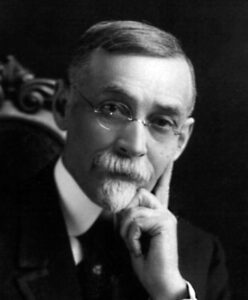
Pennock E. Sharpless, 1927.
Ancestry.com
Philadelphia: P.E. Sharpless Co.
A large part of Pennsylvania agriculture in the latter half of the 1800s centered around personal and small-scale commercial dairy production. Many farms in southeastern Pennsylvania raised cows to produce butter, milk and cheese. These goods were used domestically and sold both locally and in nearby metropolitan areas such as Philadelphia. In the second half of the 19th century, Philadelphia became known for its selection of fine butters and cheeses.
The development of the Pennsylvania commercial cream cheese trade began with keen and wiry dairyman Pennock Edwards Sharpless (1852–1935). Born in Middletown, Delaware County, to William and Sarah Ann (Yarnell) Sharpless, Pennock was a seventh-generation descendant of John Sharples of Chester, England, who sailed to Pennsylvania with William Penn.
Pennock’s father, William Sharpless, was an established Chester County dairy farmer and merchant who manufactured small quantities of butter for sale beginning in 1838. Sarah Ann was primarily responsible for making the butter on their homestead. After Sarah Ann broke her arm in a farm accident, Pennock learned the process of manufacturing butter to help his mother with her farm chores.
Pennock Sharpless received his high school education at the Maplewood Institute in Concordville and went on to attend West Chester State Normal School. After graduation, he began work as a schoolteacher but found the salary insufficient to pay off his parents’ homestead, so he returned to the dairy business.
Sharpless began professional dairying in 1873. He manufactured a high-grade, “gilt-edge” butter, using a hand-skimming method in which milk was placed in pans and the cream removed by hand, and sold an average of 50 pounds weekly to private customers in Philadelphia. He sold his butter directly from his horse wagon to circumvent stall rental in Philadelphia markets and is considered the first person to outsource milk and manufacture butter commercially in Pennsylvania.
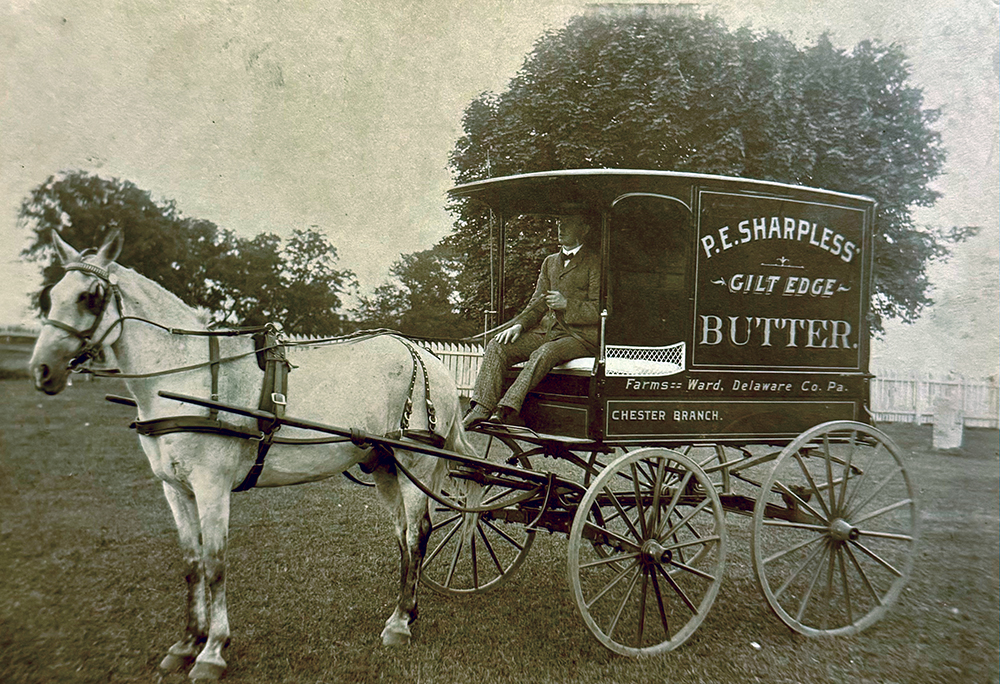
P.E. Sharpless Co. dairy wagon.
Collection of Emma Leuschner
Sharpless found that owning dairy cows outright would cause a significant strain on his small-scale butter operation. Therefore, he relied on buying milk from local farmers in his area, starting with a neighbor’s dairy at 4 cents per quart. This strategy quickly grew into sourcing milk from more than 20 dairies in the region.
In 1876 Sharpless established the first-known commercial creamery in Pennsylvania in the Chester County town of Toughkenamon. He purchased a Danish–Weston cream separator machine, and his butter became popular around the Philadelphia area, garnering noteworthy write-ups in newspapers such as The Philadelphia Times and The Lancaster Examiner where his butter was described as a “golden morsel” that consumers would “never put tongue to anything so toothsome.”
Sharpless moved his dairy operation from Toughkenamon to Concordville, Delaware County, in the early 1880s, after the establishment and boom of the Pennsylvania Railroad in Concord Township. His dairy business gained traction in southeast Pennsylvania, and he found that he needed to ship his products faster and farther to meet demand.
By 1882 Sharpless purchased what would become the Concordville plant building in the village of Ward from the local Farmers’ Association and immediately began butter and cottage cheese production in the new facility. This plant was located across Concord Road from the Concordville Station railroad stop, allowing for his products to be shipped to consumers shortly after production. Reports of 600 pounds of butter weekly were noted in 1883 from the Concordville plant. By 1884 the plant had a capacity for handling 15,000 pounds of milk.
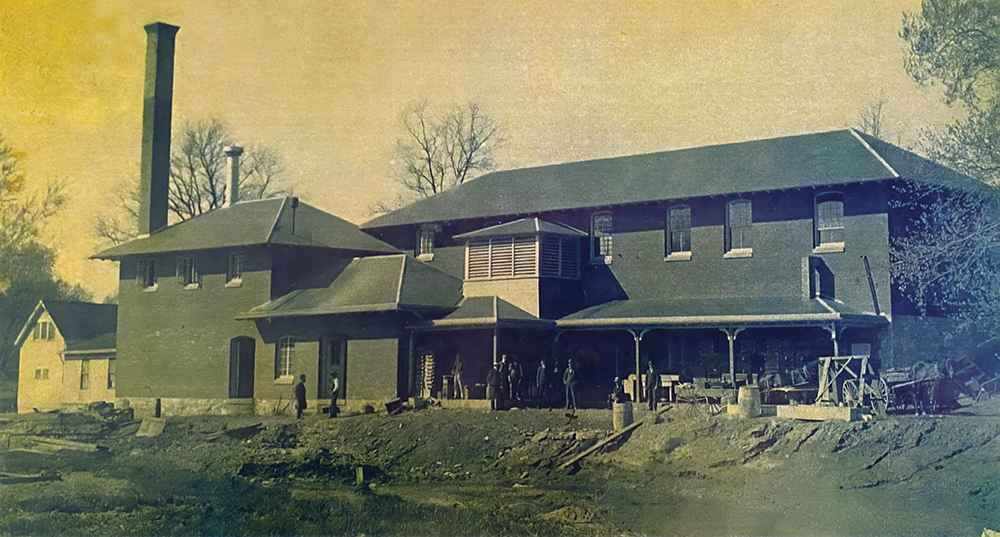
P.E. Sharpless Co. manufacturing plant in Concordville, early 1900s.
Concord Township Historical Society
In 1902 Sharpless organized his thriving business into a corporation under the name P.E. Sharpless Co. In January 1904 the company was granted a charter from the state with a capital of $52,000. He rapidly expanded the company’s reach, opening administrative offices in Atlantic City and Philadelphia and operating seven branch creameries in Delaware and Chester counties.
Soon, the P.E. Sharpless Co. established dairy plants throughout Pennsylvania in Cream, Bradford, Troy, Cochranville, Harrisburg, York and Philadelphia, as well as in Rising Sun and Zion, Maryland; Wilmington, Delaware; and Atlantic City. The Lancaster Examiner reported in March 1902 that Sharpless Co. butter was in “great demand” in large Eastern Seaboard cities such as Philadelphia, New York City, Baltimore and Washington, D.C. The brand was so well known and well regarded that Sharpless butter was chosen for use in the White House during the William McKinley and Theodore Roosevelt presidential administrations. By the end of the 20th century’s first decade, Sharpless Co. solidified its reputation as a popular, high-quality dairy brand.
In 1909 Sharpless hired John B. Fassler to oversee cream cheese production in his Concordville plant. Fassler was a German cheese expert previously employed in the Vermont dairy industry. He had a decade of experience producing Camembert, Brie and cream cheese and even taught for a time as a master cheesemaker in Switzerland. By 1910 the Concordville plant was using 11,000 pounds of milk daily to produce 2,000 pounds of cheese “under the direction of master cheesemaker John B. Fassler of Germany,” according to the New York Produce Review and American Creamery.
Sharpless Co. cream cheese bricks were sold in cities across Virginia, Maryland, New Jersey, New York, Rhode Island and Massachusetts. The rectangular blocks of cream cheese were wrapped in a tinfoil package and featured an illustration of a cow and words written in blue ink: “Pure and Palatable / Made Daily at Concordville, PA / P.E. Sharpless Co. / Philadelphia, PA / Cream Cheese.”
Newspaper advertisements often used the slogan “On Every Tongue!” when marketing Sharpless products. The company expanded to include various styles of cream cheese, such as olive, Neufchâtel,
and Spanish pimento, all sharing the same label designs and proudly proclaiming their fresh, daily manufacture in Concordville.
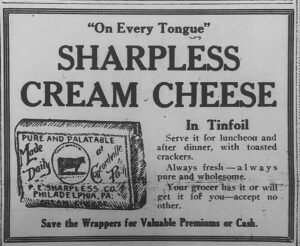
P.E. Sharpless Co. cream cheese advertisement published in The Evening Star (Washington D.C.), December 17, 1915.
Patent Wars and Buyouts
In 1913 the Sharpless Co. entered a heated trademark lawsuit with William A. Lawrence & Son, the first company to produce cream cheese in the United States, which sold its trademarked cream cheese product with a similar cow figure on a tinfoil label under the moniker “Philadelphia Cream Cheese,” despite it being manufactured in New York State. Lawrence & Son brought the lawsuit against Sharpless for trademark infringement and alleged that Sharpless defrauded consumers into mistaking its cream cheese for the Lawrence product. Lawrence registered a trademark in the United States Patent Office for this packaging design related to cheese products in January 1881. Sharpless asserted that it used this same design for its butter goods in 1838, with the use of a cow-figure impression on its blocks of butter and cottage cheese. Sharpless ultimately lost this suit but won a later appeal. The lawsuit set a legal precedent for commercial food trademark law.
The Sharpless Co. received three United States patents in the early 20th century: Patent #1,258,438 in 1918 for its process of making soft cheese, Patent #1,399,270 in 1921 for its method of packaging and sealing perishables, and Patent #1,466,380 in 1923 for its process of coating metal foil with paraffin.
In 1924 cream cheese was made commercially by only five companies in the United States. In addition to Sharpless, they were Phenix and F.X. Baumert in New York, Blue Label Cream Cheese Co. in Winslow, Illinois, and Kraft Cheese Co. of Chicago. That same year, Kraft purchased the entire stock of the P.E. Sharpless Co. Pennock Sharpless was 72 years old at the time of the sale and involved in other business ventures. His son, Caspar, remained general manager after the acquisition.
Kraft obtained the three patents issued to the Sharpless Co. for its cream cheese manufacturing process. Kraft’s strategic purpose in buying Sharpless was to acquire its distributing facilities in the Philadelphia area.
Kraft continued to buy cream cheese companies and eventually merged with Phenix in February 1928. At the time of the merger, Phenix owned the William A. Lawrence Co. and the trademark to the Philadelphia Cream Cheese brand.
*****
In the century since the P.E. Sharpless Co. was acquired by Kraft, many of its buildings were sold, demolished or lost to time. The Pennock E. Sharpless House at 684 Concord Road in Glen Mills is the only pristine physical reminder of the Sharpless dairy empire and has been recognized recently as such. The house received the 2023 Site Preservation Award from the Heritage Commission of Delaware County and was listed in the National Register of Historic Places on September 9, 2024, for its Queen Anne Revival architecture and the individual significance of Pennock E. Sharpless.
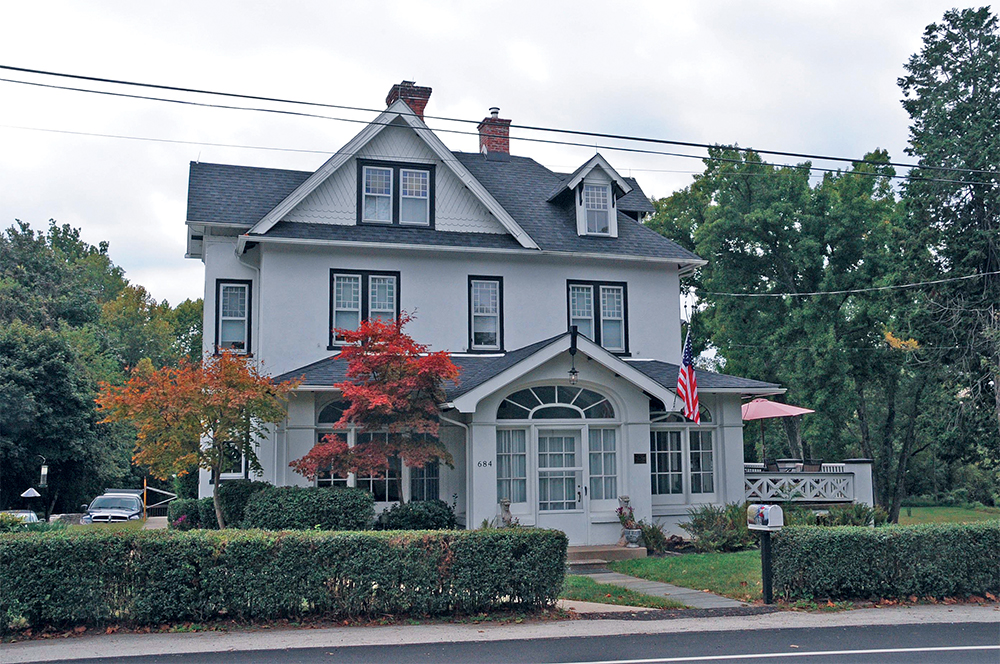
Pennock E. Sharpless House at 684 Concord Road in Glen Mills.
Wikimedia Commons / KLOTZPLATE
Although the William A. Lawrence & Son Co. is credited with the invention of American cream cheese, it is only one piece of the larger story of Philadelphia Cream Cheese. P.E. Sharpless was the only Pennsylvania-based company to manufacture cream cheese commercially in the United States at the end of the 19th century and was acquired in 1924 by Kraft, the current manufacturer of Philadelphia Cream Cheese. In short, Philadelphia Cream Cheese did, more or less, come from Philadelphia.
Emma Leuschner lives in Concord Township with her husband and two sons. She serves on the Board of Trustees of the Nicholas Newlin Foundation, the Research Committee at the Concord Township Historical Society, and the Delaware County Heritage Commission. She compiled the Pennock E. Sharpless House nomination for the National Register of Historic Places that led to its listing in 2024. Leuschner volunteers at the American Helicopter Museum & Education Center and enjoys researching local history topics in her spare time.