
Fellow Travelers: The Fight to Desegregate Philadelphia’s Streecars After the Civil War
Written by Terry Crowley in the Features category and the Fall 2024 issue Topics in this article: African Americans, civil rights, David Bustill Bowser, desegregation, horse-drawn streetcars, Jacob White Jr., Morrow B. Lowry, Octavius Catto, Pennsylvania State Equal Rights League (PSERL), Philadelphia, Robert Smalls, William Forten, William Still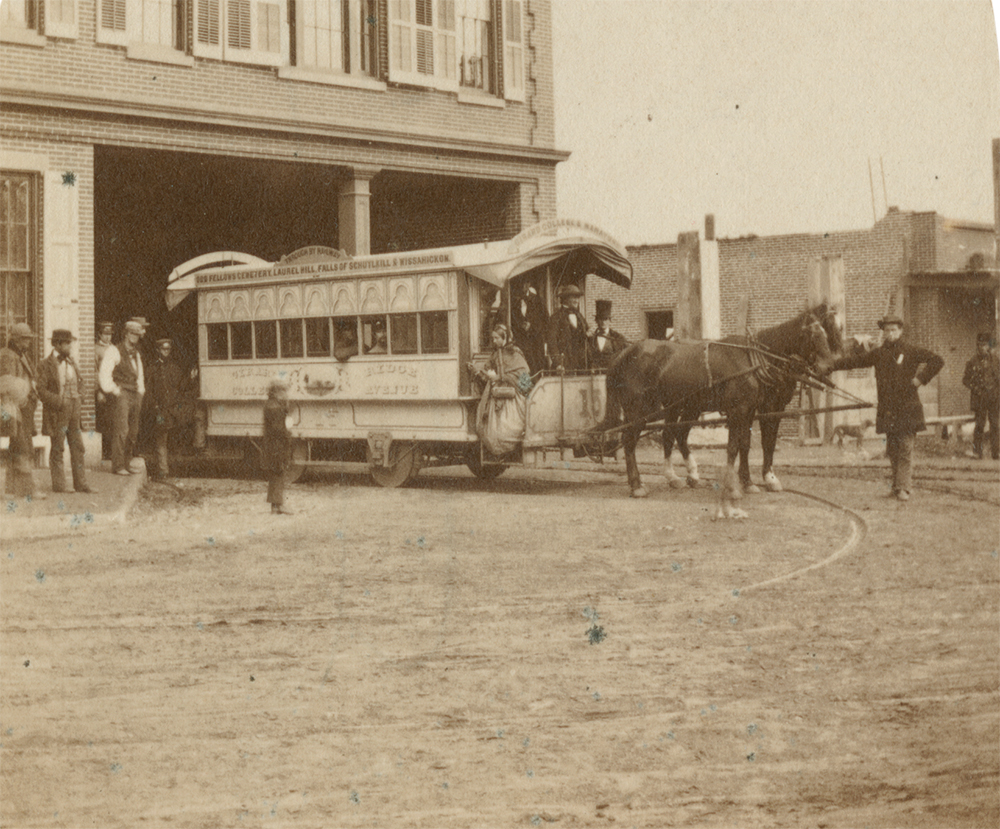
A horse-drawn streetcar at the Ridge Avenue depot in Philadelphia. Blacks were forced to stand on the outside platform.
Library Company of Philadelphia
“When a nation suffers as ours does, from the misfortune of having two races . . . one long civilized, the other emerging from the shades of barbarism . . . there is much in the relations between them that must be left to the lessons of experience and the tribunal of public opinion.” And so, Judge John Hare of the Philadelphia Court of Common Pleas ruled that a Black man was not entitled to damages he sought for being ejected from a Philadelphia streetcar. Decided in 1861, Goines v. McCandless upheld the legal right of railway companies to exclude Blacks from riding the streetcars in the City of Brotherly Love.
The first streetcar line in Philadelphia opened to the public in January 1858. Built by the Philadelphia & Delaware River Rail Road, the line ran along Fifth and Sixth streets from Frankfort to Southwark. The cars, which were 14 feet in length and 7 feet wide, ran along rails and were pulled by a team of horses. Passengers could ride the cars for only 5 cents.
These horse-powered railways soon became very profitable, and within two years there were 19 streetcar companies operating in Philadelphia with routes covering the entire city. By 1860 the streetcars were carrying more than 46,000 passengers per day.
From the outset, the streetcar operators either excluded Blacks from riding in the cars or forced them to stand on the platform outside of the covered cabs, where they were subject to rain, snow and freezing cold. To add insult to injury, the horses kicked up mud, dust and dirt in their faces and on their clothes, which made for an unpleasant experience. Riding on the platforms was not only unpleasant but also dangerous. The cars traveled at high speeds and were difficult to stop. On a cold, rainy night in the winter of 1862, a Black minister going from his home in Frankfort was killed when he fell from a platform.
Of the 19 streetcar companies operating in the city, 11 did not allow Blacks to ride, and eight either forced them to the platform or separated them from their white customers.
On the eve of the Civil War, Philadelphia had the largest Black population of any Northern city — about 22,000 or 4 percent of its residents were Black, and it was the only major Northern city in which they were not permitted to ride. The streetcars in Boston, New York, Chicago and even the Southern city of New Orleans had already been integrated.
In Philadelphia, some of the most distinguished African Americans of the period suffered the indignity of being ejected from a streetcar, including the famed abolitionist and orator Frederick Douglass, author and playwright William Wells Brown, and Civil War hero Robert Smalls, the escaped slave who commandeered a Confederate ship at Charleston and delivered it to the Union Navy. Smalls was awarded a $1,500 prize from Congress for his bravery, yet he was not permitted to board a streetcar going to the Philadelphia Navy Yard, where his ship, the USS Planter, was being repaired.
The long struggle to integrate the streetcars first began in 1859 with a letter from William Still (1821–1902) to The North American, a Philadelphia daily newspaper, protesting the injustice of a “genteel people” being excluded from the city passenger railroad cars. Still, a prosperous coal merchant and father of the Underground Railroad, had helped nearly 900 freedom seekers escape from slavery. More letters to all the city’s newspapers would follow, as part of a strategy to make the public aware of the unfair policies of the railcar companies.
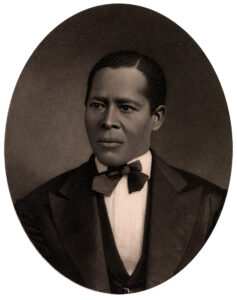
William Still, known as the father of the Underground Railroad, started the campaign to integrate the streetcars in Philadelphia.
National Portrait Gallery, Smithsonian Institution
As corresponding secretary of the Social, Civil and Statistical Association of the Colored People of Philadelphia, Still next presented a petition to the railroad executives calling for an end to the segregation of the streetcars. The petition was signed by 360 of Philadelphia’s wealthiest and most influential white citizens — among them doctors, lawyers, merchants, editors and clergymen. The clergy from the various denominations — Episcopal, Methodist, Presbyterian and Baptist — all agreed to sign “without hesitation.” According to Still, the distinguished Rev. Henry Ducachet of the Episcopal Church offered “to do anything in his power to aid us.”
A few years later, the white clergy would be criticized for not doing enough. A pamphlet written in 1866 claimed that only three ministers in the entire city were preaching from the pulpit against the disgraceful rules of the streetcar companies. It seemed the other ministers were much more concerned that the operation of streetcars would be prohibited on Sundays.
While the clergy may not have done enough, the press was actually hostile to integration. Only two of the seven Philadelphia daily newspapers — The Press and The Bulletin — supported the desegregation of the cars, while one newspaper reported the various attempts by Black men and women to ride the streetcars under the headline “Riotous Conduct of Negroes.”
The press criticized the signers of the petition, saying that they were well-to-do and could afford their own means of private transportation rather than riding the streetcars themselves.
In June 1862 the petition was presented to the presidents of the 19 railway companies. Two of the presidents signed the petition, while two or three others said they were in favor but abstained from signing the document. Most were cold and indifferent. The presidents agreed to discuss the issue at their next monthly meeting but then conveniently forgot, and the issue never came up again.
Meanwhile, Black men and women were risking life and limb defying the unjust rules of the railway companies. In one incident, a conductor ordered an elegantly dressed young Black woman to the outside platform. When she steadfastly refused to step outside, the car was stopped. The conductor grabbed hold of the woman and physically threw her out of the car. The father of the woman paid several hundred dollars of taxes annually to the city, leading William Still to remark that “nobody insults a colored man or woman in the Tax Receiver’s office.” In fact, Blacks paid more in taxes in Philadelphia than in any other Northern city during the 1860s. Yet these taxpayers could not board a streetcar.
During the Civil War, Black soldiers — including one man who had lost his leg in service to his country — were routinely tossed from the streetcars. But perhaps the most appalling example of the injustice of the car companies’ “rules” involved the 1,500 wounded Black soldiers being treated at the Satterlee Military Hospital in West Philadelphia. These soldiers, many of whom were heroes on the battlefield, could
not see visitors because the streetcar line with a stop at the hospital did not allow Black passengers. Mothers, fathers, wives, sisters and brothers could not even comfort their loved ones. The $8 or $9 fare for a private carriage ride was too expensive for most.
There was no remedy in the courts either, as judges were affirming the right to exclude Black people from the cars. In Goines v. McCandless, Judge Hare opined that the railway companies could lay down rules for the “comfort and convenience” of the rail passengers and “what rules are proper, must necessarily be left to the discretion of the corporation.” If riding with Black passengers made the white passengers uncomfortable, then the rules would be proper according to the judge. “Public sentiment” must be consulted. The court would not interfere.
Unfavorable decisions in the courts continued throughout the early part of the 1860s. It wasn’t until 1865 that a victory would come. In this case, a woman known only as “Mrs. Derry,” a respectable, lightskinned woman — “almost white” according to the Philadelphia Court of Common Pleas proceedings — was traveling on the Lombard & South Street line late at night, coming home from church where she was providing comfort for wounded soldiers.
After being seated for a few minutes, the conductor told her to get out, using a racial slur. Mrs. Derry pleaded that it was late and that the other passengers in the car had no objections to her riding. She refused to leave the car. The conductor then summoned two of his buddies who were standing on a nearby street corner, and the three struck, kicked and threw her from the car, injuring her.
At the trial, the defendants said they only used force when she had resisted the rule. A Philadelphia police officer, using a racial epithet to describe Mrs. Derry, testified that the conductor kicked her.
Judge Joseph Allison charged the jury that common carriers could not make color discriminations. According to Allison, the law would not allow the passenger railway companies to exclude a class of people based on nationality or color. Although acknowledging that past court decisions had permitted the exclusion of Black passengers from the cars, Allison said the valor of Black soldiers in the Civil War had changed things: “The logic of events of the past four years has in many respects cleared our vision and corrected our judgement, and no proposition has been more clearly wrought out by them than that men who have been deemed worthy to become defenders of the country, to wear the uniform of the soldier of the United States, should not be denied the rights common to humanity.”
The jury awarded Mrs. Derry $50 in compensatory and vindictive damages, which today would amount to approximately $942.
The verdict in Derry v. Lowry did not, however, resolve the issue. The railcar companies continued with their discriminatory rules, maintaining that the decision only applied to the facts and circumstances of that particular case. The point of law — whether exclusion from the streetcars was legal — had not been settled, as no case had yet worked its way up to the Supreme Court of Pennsylvania.
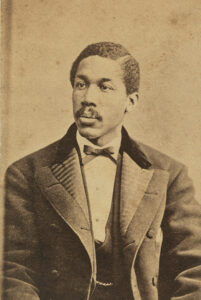
Octavius V. Catto, the secretary of the Pennsylvania State Equal Rights League, helped write provisions of the bill that desegregated the streetcars in 1867.
National Portrait Gallery, Smithsonian Institution
With no resolution in the courts, the struggle for equal rights continued. The 1860s brought a new generation of leaders in Philadelphia who, unlike their predecessors, were not willing to compromise. They included Octavius V. Catto (1839–71), a charismatic young teacher at Philadelphia’s Institute for Colored Youth; David Bustill Bowser (1820–1900), an artist who earned his living as a sign painter; William D. Forten (1823–1909), son of the affluent sail manufacturer and early civil rights leader James Forten; and Jacob White Jr. (1837–1902), principal of the Roberts Vaux School.
It was Catto who became the voice of the campaign to desegregate the streetcars. Young and handsome, he taught English and math at the city’s finest Black school; was a member of the Banneker Institute, a Black literary and debating society; and was the star second baseman on the Pythians, an early Black baseball team that sometimes played against white ballclubs in the area. An eloquent speaker, Catto seemed to be everywhere in the city. One night, he would address the Colored Union League; the next night, he could be found organizing a public meeting at Liberty Hall; and the following night, he would be giving a speech before the Equal Rights League. Catto was always agitating and urging defiance. He fought for the rights of Blacks in court, wrote to newspapers, called upon Christians to vindicate their Christianity, and appealed to his white fellow citizens to speak out. Catto continued the fight until the streetcar companies ended their unjust practices.
In a memorable speech at Sansom Street Hall in June 1866, Catto called for bold defiance of the streetcar rules. He condemned the rail companies for ejecting soldiers and delicate women, and called on gentlemen “to vindicate their manhood, and no longer suffer defenseless women and children to be assaulted or insulted with impunity by ruffianly conductors and drivers.”
At Catto’s urging, Black men and women continued defying the rules — making an organized effort to appear on every car on the street. Confrontations on the streetcars became a daily occurrence. In June 1866, more than 30 students from Lincoln University, one of America’s earliest historically Black colleges, boarded a streetcar and staged a mass sit-in. There was nothing the conductor could do to prevent them from riding.
Meanwhile, some white citizens of Philadelphia heard Catto’s call to action and joined the protest. On January 13, 1865, 70 of the city’s most prominent people of both races gathered at Concert Hall, located at 12th and Chestnut streets, intending to speak directly to the rail companies. The leading white Philadelphians at the meeting included railroad magnate Jay Cooke, the man who almost single-handedly financed the Union war effort; Henry C. Carey, the eminent economist; and Matthias Baldwin, founder of Baldwin Locomotive Works. Phillips Brooks, the esteemed Episcopal clergyman and pastor of the Church of the Holy Trinity, and Presbyterian preacher T. DeWitt Talmage, one of the most prominent religious leaders in America at the time, were also there.
A few days after the meeting, the Concert Hall Committee presented, in person, their resolutions to the presidents of the railway companies. The committee resolved to oppose both the exclusion of respectable persons from railcars on the ground of complexion and the special cars that were set aside for Blacks, calling them “a simple substitution of one act of injustice for another, and . . . as much a violation of their rights as is the rule of total exclusion.”
Their efforts were futile. The railcar presidents did not want to make a decision, so they punted to the board of directors. “See the board of directors,” they said. So, a meeting was arranged with the railway company directors.
The directors did not want to take the lead but would if their competitors did. They offered to integrate the cars when three-fourths of the companies agreed to admit Black riders. The Union Line resolved to put on an extra car and label it “colored.” The Ridge Avenue Road line agreed to run cars at long intervals to accommodate Black riders. Only one company, the West Philadelphia & Darby Road line, unanimously agreed to lift the prohibition and admit Blacks to the railcars.
In the end, the directors were just as noncommittal as the presidents. They said that they were “merely directors,” so they referred the thorny question to their stockholders to decide. The runaround continued.
The Concert Hall Committee then met with a group of stockholders from the various rail companies. The stockholders told the committee that the issue was a matter of dollars and cents. They did not want to offend the white passengers. If it was all right with the riders, then the stockholders would not object to admitting Black passengers. They offered that the matter be resolved by a vote of their patrons.
Ironically, on January 31, 1865, the same day that Congress voted to officially end slavery in the United States, white passengers on Philadelphia streetcars were being handed ballots and asked if Black people should be allowed to ride on the cars. Not surprisingly, the vote was overwhelmingly against.
After the unsuccessful appeal to the railway companies, the Concert Hall Committee next turned to Philadelphia’s Republican mayor, Alexander Henry, requesting that he prevent the city police from assisting the conductors in ejecting Black riders. Henry refused to act. A staunch Union man, Henry had been a leading opponent of slavery but had his own prejudices, saying, “I do not wish the ladies of my family to ride in the cars with colored people.”
Meanwhile, the losses in court continued. Local civil rights organizations raised funds to assist nine ejected passengers in bringing criminal cases against conductors, but grand juries refused to indict — many times because white passengers would not testify. Four plaintiffs brought civil actions for damages, but judges either ruled against the plaintiffs or tossed the complaints out of court. Success in the courts depended on which judges were assigned the cases and how they instructed the juries. In Philadelphia, few judges were sympathetic.
Then, in October 1866, a second victory came. On a crisp autumn afternoon, Mary E. Miles, a schoolteacher from rural Chester County and her 11-year-old niece entered a car on the West Chester line and took the only vacant seats, which were in the middle of the car. The conductor informed them of the rules of the company — Black people could only sit in the seats at the end of the car. The conductor then began working on the seating arrangements, moving the white passengers from back to front and ordering Miles and her niece to take the last seats. When Miles refused, he stopped the car and escorted them out.
Miles sued the West Chester Railroad. The case fell into the hands of Judge James Pierce who charged the jury in accordance with Derry v. Lowry: Common carriers were bound to hold all passengers and could not discriminate based on complexion. If they could, Pierce stated, “they might do so on account of nationality or religion, and this the law would not tolerate.” The jury awarded Miles $5 (about $97 today).
Incredibly, this verdict would be overturned a year later by the Supreme Court of Pennsylvania — six months after the Pennsylvania legislature passed a law integrating the cars. The court acknowledged that the recently passed legislation prohibited the exclusion of Black riders going forward but decided that at the time the injury occurred, which was nine months prior to the enactment of the law, the railroad had the right to remove Miles from the car since the seat that was offered to her was not inferior to the seats of the white passengers. Separating the races was permissible to “secure order, promote comfort, preserve the peace, and maintain the rights of both carriers and passengers.” Black plaintiffs would not get relief retroactively. West Chester & Philadelphia Railroad v. Miles was cited by the U.S. Supreme Court in its infamous Plessy v. Ferguson decision in 1896 that allowed for separate but equal public facilities for Blacks.
During the war, new civil rights organizations were springing up throughout the country and the state. In February 1865 the Pennsylvania State Equal Rights League was formed. Its goal was the recognition of the rights of Black people throughout the state. To win over friends to their cause, the league encouraged morality, education, temperance, frugality, industry and good citizenship in its members. Equality under the law was their aim. The league’s president, William Nesbit, summed up the organization’s philosophy: “We ask no special privileges, only for a fair chance in the race of life, and recognition to our own personal merits. To ask less is not manly, to ask more is foolishness.”
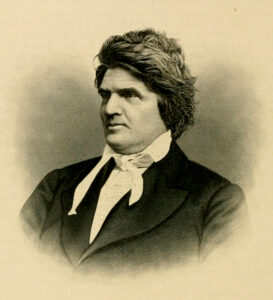
Sen. Morrow B. Lowry of Erie sponsored the bill that integrated the streetcars in Philadelphia in 1867. The Pennsylvania State Equal Rights League called Lowry “an unfaltering, indefatigable and fearless vindicator of the rights of the colored man.”
From The Biographical Encyclopaedia of Pennsylvania of the Nineteenth Century (Galaxy Publishing, 1874)
The Pennsylvania State Equal Rights League would play a major role in integrating the streetcars in Philadelphia, raising funds to broadcast its message all over the state. Members wrote to newspapers, circulated pamphlets, and most importantly, lobbied the state legislature.
The Car Committee of the league, which included Catto, Forten and Bowser, tirelessly lobbied state legislators to support a bill to desegregate the streetcars that had been introduced in the Pennsylvania State Senate. The committee assisted with the wording of the bill, drafting provisions that awarded damages of $500 per passenger against any streetcar company or employee that barred passengers on account of color or race and made violations a criminal offense subject to fines of $100 to $500 or 30 to 90 days imprisonment.
The champion of the bill in the Pennsylvania legislature was a little-known senator from Erie County by the name of Morrow B. Lowry (1813–85). Lowry was described by the Pennsylvania State Equal Rights League as an “unfaltering, indefatigable and fearless vindicator of the rights of the colored man.” Known as the moral conscience of the State Senate, he stood for the absolute equality of all men before the law. Lowry had introduced the bill to desegregate the cars as early as 1861, but it languished in committee for years.
By February 1865 the bill had passed the Senate but was being bottled up in the Passenger Railway Committee in the House. The bill could not get to a vote even though 12 of the 15 members of the railway committee were Republicans, and eight of the Republicans and the three Democrats were from Philadelphia. The chairman of the committee, Edward G. Lee, was so against the bill coming to a vote that he claimed the original bill was lost. It was missing from the files, he said. When Lowry threatened to expose the chairman’s political shenanigans, the bill was somehow miraculously retrieved from the Senate records.
The streetcars bill explicitly stated that any service given or withheld on account of race was strictly prohibited, including compelling riders to sit in special seats or seating them apart from other riders. With the help of Lowry, the bill finally got out of committee and was ready to be voted on by the House in February 1867.
In an impassioned speech on the floor of the Senate, Lowry excoriated Philadelphians for the injustice that they were inflicting on their fellow citizens: “I arraign Philadelphia, her newspapers, her corporations, her judges, her lawyers, her churches, and her citizens and pronounce them hostile to the execution of justice between man and man.” He asked his fellow legislators, “Can you look a Chrisian world in the face and say you will not pass this bill?”
Finally, the bill passed the House along party lines: 50 Republicans for and 27 Democrats against. On March 22, 1867, Republican governor John Geary signed the bill into law. After a decade-long struggle, justice had finally prevailed. In a letter to the Pennsylvania State Equal Rights League shortly after the law was enacted, Lowry wrote, “The bill was essentially your own.”
A number of factors led to the bill’s final passage. Public opinion had gradually been shifting toward integration since the end of the Civil War, and the determined lobbying effort of the Pennsylvania State Equal Rights League certainly played a major part, too. But perhaps it was approaching Black suffrage that led to the legislators’ change of heart. The 15th Amendment giving Black men the right to vote was soon to be ratified, and the Republican legislators were certain that these newly enfranchised voters would cast their ballots for their party — the party of Lincoln.
There was some opposition to the law in political circles at first. When the Philadelphia County Democrat Convention met six months later, the delegates complained in their platform that the new law “forcing” Blacks into passenger railway cars “is but the prelude to a forced association with white citizens at the ballot box and in domestic circles; a political amalgamation and a social miscegenation which we utterly repudiate.”
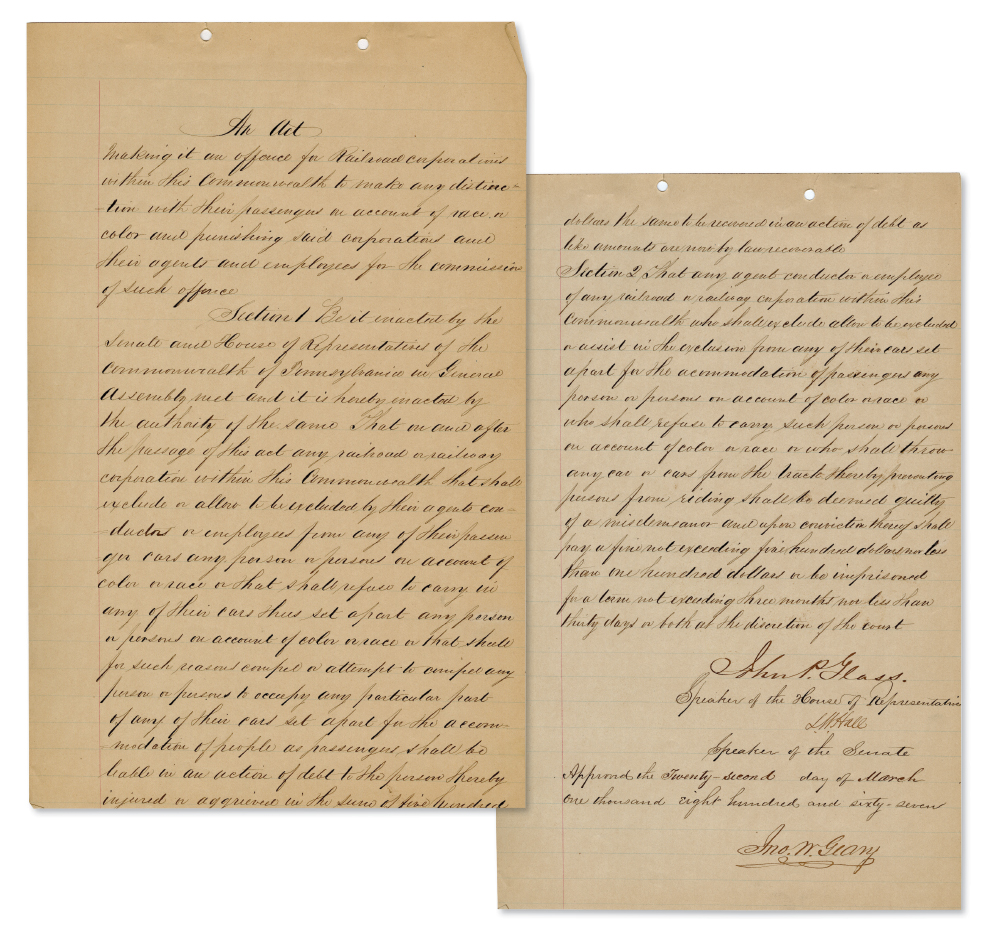
This act of the General Assembly, making “it an offense for Railroad corporations within the Commonwealth to make any distinction with their passengers on account of race or color and punishing said corporations and their agents and employees for the commission of such offense,” was signed by Gov. John Geary on March 22, 1867.
Pennsylvania State Archives, RG-26.75
In March 1868 the Democrats in the Pennsylvania legislature tried to repeal the act, but it was tabled by a strict party vote. “All the Radicals for the Negroes — all the Democrats for the white men,” reported the Bloomsburg Democrat.
And how was the new law received by the patrons of the streetcars? In his final report to the Concert Hall Committee, Treasurer Benjamin Hunt declared, “The conduct of our colored friends in the use of their newly acquired right has been all but faultless . . . they now enter the cars, not with an air of exultation at having gained a disputed point, but as if the point had never been disputed.”
As for the white passengers, there was some resistance at first, but within a few weeks they had reportedly accepted their new fellow travelers with good nature. Hunt said, “When trouble and strife were with so much confidence predicted, offence is neither given nor taken.” The white men and women who found themselves seated next to Black people for the first time “and this without harm or annoyance from the so much dreaded contact . . . have also found stirring within their hearts, in consequence, a new influx of Christian charity.”
Further Reading
Biddle, Daniel R., and Murray Dubin. Tasting Freedom: Octavius Catto and the Battle for Equality in Civil War America. Philadelphia: Temple University Press, 2010. / “Colored People and the Philadelphia City Railroads.” The Liberator, December 23, 1864. / “District Court – Judges Skarswood and Hare.” The Philadelphia Inquirer, January 22, 1861. / “News Items.” Bloomsburg Democrat, March 4, 1868. / “Political. Democratic County Convention.” The Philadelphia Inquirer, September 5, 1867. / “Railway Cars.” The Philadelphia Inquirer, April 27, 1865. / Report of the Committee Appointed for the Purpose of Securing to Colored People in Philadelphia the Right to the Use of the Streetcars. Philadelphia: Merrihew & Son, [1867]. / Rhoades, Lillian Ione. The Story of Philadelphia. New York: American Book Co., 1900. / “The Rights of Colored People in Railway Cars.” The Philadelphia Inquirer, October 12, 1866. / Speirs, Frederic W. The Street Railway System of Philadelphia: Its History and Present Condition. Baltimore: John Hopkins Press, 1897. / Still, William. A Brief Narrative of the Struggle for the Rights of the Colored People of Philadelphia in the City Railway Cars. 1867; Reprint, Philadelphia: Historic Publications, 1969. / Vogdes, Elizabeth. “Important Racial-Discrimination Case Played out on Local Train Line.” Swarthmore College Bulletin, January 2014. / “Vote on Riding Railcars.” The Philadelphia Inquirer, January 28, 1865. / Weigley, Russell F., ed. Philadelphia: A 300-Year History. New York: W.W. Norton, 1982. / Why Colored People in Philadelphia Are Excluded from the Street Cars. Philadelphia: Merrihew & Son, 1866.
Terry Crowley is a freelance writer from Cherry Hill, New Jersey, specializing in local history.